
Why Crushing Tablets Is Not Always Safe

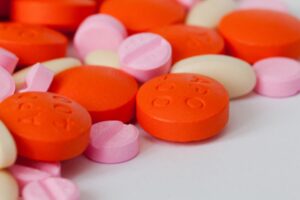 A tablet can look very simple. It is small, solid and sometimes stubbornly unwilling to cooperate with anyone who has difficulty swallowing.
That is when the spoon, pill crusher or kitchen utensil may make an appearance.
Crushing a tablet can seem like a practical solution. Turn it into powder, mix it with something soft and problem solved—right?
Not always.
Some tablets are carefully designed to control how quickly, where or under what conditions the medicine is released. Crushing them can interfere with that design. That tiny tablet may be doing more engineering than it lets on.
Not All Tablets Work the Same Way
Some ordinary immediate-release tablets may be suitable for crushing, but others are made with special release systems or protective coatings.
You cannot reliably tell whether a tablet is safe to crush simply by looking at its colour, shape or size. Two tablets may appear nearly identical while having completely different instructions.
That is why the safest rule is simple:
Check the exact medication and formulation before crushing, chewing, splitting or opening it.
A different strength or manufacturer may also have different characteristics, so advice given for one product should not automatically be applied to another.
Extended-Release Tablets Need Time
Some medications are designed to release their active ingredient gradually over several hours.
The label or product name may include letters such as:
- ER
- XR
- SR
- CR
- MR
- XL
- LA
These abbreviations can suggest extended, sustained, controlled, modified or long-acting release. However, abbreviations are not completely standardized, so they should be treated as clues—not permission to make a decision without checking.
When an extended-release tablet is crushed, the medicine may be released much more quickly than intended. This is sometimes described as dose dumping.
Instead of receiving the medicine gradually, the body may be exposed to a larger amount over a shorter period. That could increase the chance of side effects and may also mean the medication does not continue working for as long as intended.
The tablet was given a schedule. Crushing it may cancel the schedule and send everybody home early.
Enteric Coatings Also Have a Purpose
Some tablets have an enteric or delayed-release coating.
This coating may protect the active ingredient from stomach acid, prevent the medicine from being released too early or reduce direct exposure of the stomach to an irritating ingredient.
Enteric coatings are intended to delay release until the product has moved beyond the stomach. Crushing or chewing the tablet removes that protection.
The result could be reduced effectiveness, stomach irritation or release of the medication in the wrong part of the digestive tract.
A coating is therefore not decorative icing. It may be an important part of how the medicine is intended to work.
Crushing Can Affect the Dose
Even when the medication itself is suitable for crushing, the preparation method can create additional problems.
Some powder may remain:
- On the crushing device
- Inside a plastic bag
- On the spoon
- In the cup
- In the food or drink used for mixing
If the entire mixture is not consumed, the person may not receive the complete dose.
Mixing medication into a full bowl of food is especially risky because the person may not finish it. A pharmacist may recommend using a small amount of an appropriate food or liquid for certain medications, but this should be confirmed first. Some medicines also interact with particular foods or must be taken on an empty stomach.
“Hide it in whatever is available” is not a universal medication-administration strategy.
The Powder May Be Hazardous to Handle
Crushing a tablet can release fine particles into the air or onto nearby surfaces.
Specialist Pharmacy Service guidance explains that some tablets should not be crushed and that exposure to medication powder should also be considered.
For certain medications, that powder may be harmful to the caregiver, family member or healthcare worker preparing the dose. Extra caution may be required with medicines such as some cancer treatments, hormones, immunosuppressants and medicines that may harm an unborn baby.
Specialist Pharmacy Service guidance notes that operator exposure should be considered and advises against crushing certain cytotoxic or teratogenic medicines unless there is no appropriate alternative.
This is another reason not to crush medication casually in a shared kitchen or near children, pets, food-preparation surfaces or someone who is pregnant.
What About Scored Tablets?
A line across a tablet may indicate that it has been designed or assessed for splitting—but a line does not automatically mean the tablet can be crushed.
Splitting and crushing are different actions.
The FDA advises that most sustained, controlled or timed-release medicines are not intended to be split unless the approved product information specifically says they may be divided.
Check the label and ask the pharmacist before using the score line. Do not assume every decorative-looking groove is an invitation.
What Should You Do If Swallowing Is Difficult?
Do not stop the medication or change it on your own.
Contact your pharmacist or prescriber and explain the problem. Depending on the medication, possible options may include:
- A smaller tablet
- A liquid formulation
- A dissolvable or dispersible product
- A different strength that changes the number or size of tablets
- Another dosage form
- A different medication that is easier to take
- Approved instructions for dispersing, splitting or opening the product
Not every medicine is available in every form, and alternative formulations may have different strengths, measuring requirements or absorption characteristics. The pharmacist should confirm the correct product and dose.
The NHS advises speaking with a pharmacist before crushing, dividing or opening tablets and capsules.
If swallowing problems are new, worsening or affecting food and liquids as well as pills, speak with a healthcare professional. Difficulty swallowing can need medical assessment. The NHS also advises seeking pharmacy guidance rather than crushing or opening pills without professional advice.
Check Before You Change the Tablet
Before altering a medication, look for phrases such as:
- Swallow whole
- Do not crush
- Do not chew
- Do not split
- Modified release
- Extended release
- Delayed release
- Enteric coated
Keep the medicine in its original labelled container so you can confirm its full name, strength and directions. Your pharmacist will need those details to give accurate advice.
For more help reading your medication information, see Dose vs Directions on a Label: What’s the Difference?
When collecting a new medicine, it is also worth asking whether it can be split or crushed before leaving the pharmacy. See New Prescription? Check These 4 Things Before Leaving for a simple pickup checklist.
The Bottom Line
Some tablets may be crushed safely, but others should remain intact because their coating, structure or release system is part of the treatment.
Before crushing, splitting, chewing or opening medication:
Pause. Read the label. Keep the original container. Ask the pharmacist.
A thirty-second question can prevent a tablet from receiving a very unfortunate—and potentially unsafe—kitchen makeover.
Disclaimer
This article is for general health education only and is not medical advice. Medication formulations, doses, administration instructions and individual health needs vary. Do not crush, split, chew, dissolve or open any medication unless a pharmacist, prescriber or other qualified healthcare professional confirms that it is safe and appropriate for that exact product and patient. Seek medical advice for persistent or worsening swallowing difficulties.