
The Label Sticker People Ignore: Medication Storage Instructions

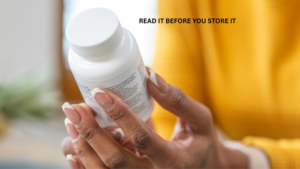 You collect a prescription, glance at the main directions, and put the bottle away. Done, right?
Not always.
That small coloured sticker saying “Refrigerate,” “Protect from light,” “Keep dry,” or “Do not freeze” is not decorative trim. It is part of the medication storage instructions, and it may affect where the product should be kept.
Why Storage Instructions Matter
Medicines are designed and tested for particular storage conditions. Heat, moisture, light, or freezing temperatures may affect some products. The tricky part is that a medicine does not always announce a storage problem by changing colour, smell, or appearance.
That is why the safest rule is simple: read the storage wording on the pharmacy label, package, or information leaflet before deciding where the medicine belongs.
Health Canada recommends keeping medications in their original containers and storing them in a cool, dry area away from sunlight. However, the specific instructions supplied with your product should always take priority.
Four Small Phrases With Important Meanings
“Refrigerate”
This usually means the medicine requires controlled cold storage. It does not mean “put it somewhere chilly whenever you remember.” Place it in the refrigerator as directed, and avoid storing it in a spot where it may freeze.
Do not assume that every liquid medicine needs refrigeration. Some do, while others should remain at room temperature. Check the actual label.
“Do Not Freeze”
Freezing can damage certain products. A medicine may accidentally freeze if it is placed against a freezer compartment, directly on an ice pack, or left in a vehicle during very cold weather.
If you think a medicine has frozen, do not simply thaw it and continue using it. Ask your pharmacist whether it is still suitable.
“Protect From Light”
Some products need protection from direct sunlight or strong light. Keep them in the original bottle, box, foil, or other packaging unless your pharmacist gives different instructions. A sunny windowsill may look cheerful, but it is not a medication-storage upgrade.
“Keep Dry” or “Protect From Moisture”
Bathrooms and areas near sinks can become humid. Steam from showers and changes in temperature may make them poor storage locations for many medicines. Read more about the bathroom cabinet medication storage mistake before choosing the most convenient shelf.
Room Temperature Does Not Mean Anywhere in the Room
“Store at room temperature” does not mean the glove compartment, a sunny countertop, beside the stove, or directly over a radiator. A parked vehicle can become very hot or very cold, which is why medicines should not be left in the car.
For many household medicines, a secure bedroom drawer, closet shelf, or dedicated storage box may be more suitable, provided it follows the label instructions and remains out of the sight and reach of children and pets.
Keep the Original Container Nearby
The original container can carry the medicine name, strength, directions, expiry date, and special storage warnings. Moving a product into an unlabelled jar or mixing different medicines in one bottle can remove information you may need later.
A pill organizer may still be useful for some people, but keep the original labelled containers available for reference.
What if the Medicine Was Stored Incorrectly?
Do not panic, and do not guess.
Note what happened: Was the medicine left in a hot car? Did it freeze? Was it out of the refrigerator overnight? Was the package exposed to water or bright sunlight?
Then contact your pharmacist. The answer may depend on the specific product, the temperature, and how long it was exposed. The FDA also advises reading the supplied information for specific storage instructions and contacting a pharmacist or healthcare professional when unsure.
A quick label check before leaving the pharmacy can also prevent storage confusion at home. Ask, “Does this need refrigeration?” or “Is there anywhere I should not keep this?”
Final Reminder
The tiny storage sticker may be small, but it is doing an important job.
Before you place a new medicine in the bathroom, kitchen, car, handbag, or refrigerator, pause and read the label. Follow the product-specific directions, keep medicines secure, and ask your pharmacist when anything is unclear.
Tiny sticker. Big responsibility. No detective hat required.
Disclaimer
This article is for general education only and is not a substitute for medical advice. Always follow the storage instructions supplied with your medication. Ask a pharmacist or qualified healthcare professional if a medicine was stored incorrectly or if you are unsure what its label means.