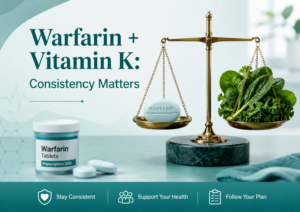
Warfarin and Vitamin K: Why Sudden Diet Changes Matter

 Warfarin is a medication used to help prevent harmful blood clots. But warfarin has one important food-related rule that many people forget:
Vitamin K intake should stay consistent.
That does not mean everyone on warfarin must avoid green vegetables. It means sudden big changes in vitamin K intake can affect how warfarin works.
Why vitamin K matters with warfarin
Vitamin K plays a role in normal blood clotting. Warfarin works by affecting the body’s vitamin K clotting pathway.
Because of this, sudden changes in vitamin K intake may change how warfarin works in the body.
For example, suddenly eating a lot more vitamin K-rich foods than usual may affect your INR. Suddenly stopping vitamin K-rich foods may also cause problems.
The key word is:
Consistency.
Common foods that contain vitamin K
Vitamin K is found in many foods, especially green vegetables. Common examples include:
- Kale
- Spinach
- Collard greens
- Mustard greens
- Turnip greens
- Swiss chard
- Broccoli
- Brussels sprouts
- Cabbage
- Romaine lettuce or dark green lettuce
- Asparagus
- Some vegetable oils
- Soybeans
- Some fruits, such as blueberries and figs
- Liver products
This does not mean these foods are “bad.” Many of them are nutritious. The concern is sudden major changes in how much you eat from week to week.
Simple example
If you usually eat spinach twice a week, your healthcare provider may already be adjusting your warfarin around your normal routine.
But if you suddenly start drinking green smoothies every morning, eating kale salads daily, and adding extra spinach to every meal, that is a major change.
The opposite can also matter. If you usually eat greens often and suddenly stop completely, that change may also affect warfarin control.
The simple rule
Do not suddenly start or suddenly stop large amounts of vitamin K-rich foods without speaking to your healthcare provider.
A helpful way to remember it:
Warfarin likes routine. Not surprise kale parties.
When to ask for help
Speak with your pharmacist, doctor, or anticoagulation clinic if:
- You want to start a new diet
- You plan to eat much more or much less green vegetables
- You are starting supplements
- You are unsure whether a food may affect your warfarin
- Your INR has been changing unexpectedly
Final takeaway
If you take warfarin, vitamin K consistency matters.
You do not need to panic over every salad, but you should avoid sudden major diet changes unless your healthcare team knows.
Warfarin and kale can be in the same room — they just need boundaries.
Related read: Grapefruit and Cholesterol Meds: Why This “Healthy” Fruit Can Cause Medication Drama