Why Dry Hands Matter for Orally Disintegrating Tablets

 Excellent.
Then you reach for an orally disintegrating tablet while your fingers are still slightly damp.
That tiny bit of moisture may matter more than you think.
An orally disintegrating tablet—or ODT—is designed to break down rapidly once it reaches your mouth. In other words, moisture is part of its job description.
Unfortunately, your wet fingertip did not receive the memo that it was supposed to wait its turn.
What Exactly Is an ODT?
An orally disintegrating tablet is different from an ordinary tablet that you simply swallow whole.
The FDA’s guidance on orally disintegrating tablets describes ODTs as solid dosage forms designed to disintegrate rapidly when placed on the tongue. They are intended to break down in saliva, often without needing to be chewed or swallowed intact with liquid.
That convenience can be particularly helpful for people who have difficulty swallowing conventional tablets.
But the same rapid-disintegration feature means handling matters.
Why Do Dry Hands Matter?
Because an ODT is designed to respond quickly to moisture, getting it wet before it reaches your mouth may cause some products to begin softening, sticking or breaking apart while you are handling them.
That is why instructions for many ODT products specifically say to use dry hands.
For example, current DailyMed instructions for ondansetron orally disintegrating tablets direct patients to use dry hands, peel back the foil, gently remove the tablet and place it on the tongue immediately.
Other ODT medication instructions similarly tell users to keep the tablet packaged until they are ready for the dose and handle it with dry hands.
So think:
Dry hands first. Tablet second.
Your ODT does not need a rehearsal before reaching your mouth.
Don’t Wrestle With the Blister Pack
Some ODTs are more fragile than conventional tablets.
For certain blister-pack products, the instructions specifically say to peel back the foil rather than push the tablet through it. Pushing a delicate tablet through foil can damage it.
But packaging varies, so don’t automatically use one opening technique for every medication.
Read the directions supplied with your specific product.
A Simple ODT Routine
When your medication instructions call for dry-hand handling:
- Wash your hands.
- Dry them completely.
- Leave the tablet in its package until you are ready to take it.
- Open the package exactly as directed.
- Gently remove the tablet without crushing it.
- Place it in your mouth promptly and take it according to the medication instructions.
And no, blowing dramatically on your fingertips like you are cooling a bowl of soup is not the official technique. A towel works beautifully.
Does an ODT Always Need Water?
Not necessarily.
Some ODTs are specifically designed to disintegrate and be swallowed with saliva without water, while instructions for other products may differ.
This is a good reminder that different medication formulations can have very different administration instructions.
For contrast, read Why a Full Glass of Water Matters With Some Medicines. Some medicines need plenty of water; some ODTs may need none. The important question is always: What does this particular product require?
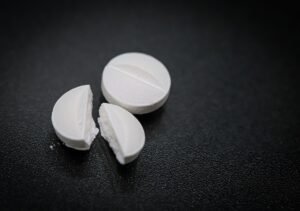
What If the Tablet Sticks or Crumbles?
Don’t automatically assume you should take another tablet.
Instructions differ between products. Some specific ODT labeling provides directions about what to do if the tablet breaks or crumbles, but that rule should not be applied to every medication.
If you are unsure whether you received the full dose, check the medication instructions or ask your pharmacist before repeating it.
And if persistent dry mouth makes an ODT difficult to use, mention that too. You can read Medication-Related Dry Mouth: More Than an Annoyance for more information.
The NatalieRx Takeaway
Orally disintegrating tablets are made to dissolve quickly.
That’s convenient—but it also means a small handling step can matter.
Dry your hands. Keep the tablet packaged until you need it. Open it as directed. Handle it gently.
Then let the tablet meet moisture where it was supposed to:
on your tongue—not halfway across your fingertip.
For more practical medication-safety explanations without the medical-school dictionary, explore the NatalieRx Blog.
Disclaimer
This article is for general health education only and is not medical advice. Handling and administration instructions vary by medication and formulation. Always follow the prescription label, package directions and instructions from your pharmacist or prescriber. If an orally disintegrating tablet becomes wet, damaged, broken or partially dissolved before you take it, ask a pharmacist what to do rather than automatically repeating the dose.