Kitchen Spoon vs Oral Syringe: Why Measuring Tools Matter

 You need to give a dose of liquid medicine.
The bottle is ready, the directions say 5 mL, and the kitchen spoon is standing nearby looking very qualified.
It is still not the right tool.
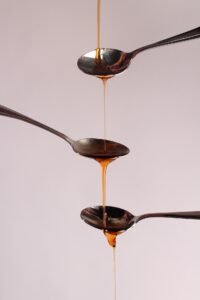
Kitchen spoons are designed for eating and serving—not accurately measuring medication. Because household spoons come in different shapes and sizes, the amount they hold can vary. That innocent-looking spoonful may therefore contain more or less medicine than the directions specify.
A Spoonful Is Not a Standard Dose
Look inside your cutlery drawer.
You may find narrow teaspoons, deep teaspoons, decorative teaspoons and one enormous spoon that seems prepared to serve an entire family.
They are all useful. They are not all 5 mL.
That is why liquid-medicine directions should be measured using a calibrated device with clear markings. Health Canada advises caregivers to use the oral syringe or plastic cup supplied with children’s acetaminophen, noting that a kitchen spoon may not hold the correct amount.
Why an Oral Syringe Can Help
An oral syringe has measurement markings that allow you to draw up a specific volume in millilitres. It can be especially helpful for smaller amounts that may be difficult to measure accurately in a large medication cup.
An oral syringe is designed to give medicine by mouth. It does not have a needle.
Before measuring:
- Read the medicine’s label and confirm the amount in mL.
- Use the device supplied with that medicine or recommended by your pharmacist.
- Make sure you can clearly see the measurement markings.
- Check the medicine’s strength or concentration.
- If the label says “shake well,” shake it before measuring.
You can learn more about that last step in Why “Shake Well” Is More Than Just a Sticker.
Do Not Mix and Match Measuring Cups
Medication cups are useful when they have appropriate markings and are suitable for the amount being measured. However, do not automatically borrow a cup from another medicine.
Different cups may use different markings or be intended for different dose ranges. The American Academy of Pediatrics recommends measuring liquid medicine in millilitres with a dosing tool marked in mL and warns against using kitchen spoons because their sizes vary.
If the supplied device is missing, damaged or difficult to read, ask your pharmacist for a suitable replacement.
The Dose and the Device Must Match
The correct measuring device cannot fix an incorrect dose.
Always check:
- The correct person
- The exact medicine
- The strength or concentration
- The amount in mL
- How often it should be given
- Whether the directions are based on age or weight
For children, a current weight may sometimes affect dosing. Read Why a Child’s Current Weight Matters for Medication Dosing for more guidance.
If you are unsure whether the label says mL, teaspoon or tablespoon—or you cannot identify the correct syringe marking—pause and ask your pharmacist. Guessing is not a measuring technique, even when done with great confidence.
The NatalieRx Takeaway
Kitchen spoons belong at the table.
For liquid medicine, use the supplied oral syringe, medication cup or another calibrated device recommended by your pharmacist. Measure the exact amount in millilitres, check the label and ask questions when anything is unclear.
Right medicine. Right dose. Right measuring tool.
This article provides general educational information and does not replace advice from your pharmacist, doctor or another qualified healthcare professional.