
Child-Resistant Does Not Mean Child-Proof

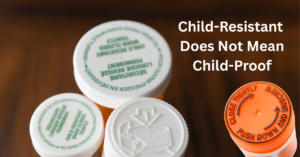 A child-resistant medication cap can feel reassuring. You push, twist, line up the arrows and occasionally wonder whether the bottle is also adult-resistant before it finally opens.
Because the cap takes effort, it is easy to assume that a young child could never open it.
Unfortunately, child-resistant does not mean child-proof.
The cap is designed to make the container harder for a child to open quickly. It may slow a child down, but it should never be treated as the only protection between a child and the medicine inside.
Think of the safety cap as one member of the medication-safety team. It is helpful, but it is not the team captain, security guard and locked door all at once.
What Does “Child-Resistant” Actually Mean?
Child-resistant packaging is designed to make a container more difficult for young children to open within a limited period. It does not mean that every child will be unable to open it.
Children are curious, persistent and surprisingly talented at investigating anything adults appear interested in. A bottle that looks ordinary to an adult may become a fascinating puzzle to a child.
That is why the cap should be considered an extra delay—not a substitute for supervision and secure storage.
The safest routine combines several layers:
- Use the child-resistant closure correctly.
- Close the bottle fully after every dose.
- Keep the medicine in its original labelled container.
- Return it immediately to locked storage.
- Keep purses, bags and pill organizers away from children.
No single step has to do all the work.
Close the Cap Completely Every Time
A child-resistant cap only works as intended when it is properly closed.
After taking or giving a dose, replace the cap immediately and make sure it is fully secured. Do not leave the bottle open because another dose will be needed later, someone interrupted you or you plan to put it away “in a minute.”
Medication accidents have a habit of using that minute very efficiently.
Also check whether the cap is damaged, loose or no longer closing properly. Speak with your pharmacist when a prescription container is difficult to secure or appears defective.
When collecting a new medicine, it also helps to check your medication before leaving the pharmacy and ask how the container should be closed and stored.
Locked Storage Is Better Than “Up High”
A high shelf may seem safe, but children climb, move chairs and explore areas adults assume they cannot reach. Height alone is not the same as secure storage.
Health Canada recommends keeping medications in their original containers and storing them in a locked cabinet or box, out of the sight and reach of children.
Choose a locked medicine cabinet, lockbox or another storage area that a child cannot easily access. Keep prescription medicines, non-prescription medicines, vitamins, supplements and other potentially harmful products together in the secure area.
The storage location should also be practical enough that adults will return medicines there consistently. A lockbox that is so inconvenient nobody uses it may become a very expensive decoration.
Watch the Temporary Storage Spots
Many medicines are not left in the official medicine cabinet. They are placed somewhere “temporarily.”
Common examples include:
- A kitchen or bathroom counter
- A bedside table
- A purse, handbag or backpack
- A diaper bag
- A coat pocket
- A suitcase
- A visitor’s bag
- The refrigerator
These locations may be convenient for adults, but they may also be easier for children to reach.
When grandchildren or young visitors are coming over, check bags, counters, bedrooms and guest areas—not only the main medicine cabinet. Visitors may carry prescription medicine, pain relievers, vitamins or other products without realizing that their usual storage habits are unsafe around children.
Keep Medicines in Their Original Containers
Keeping medicine in its original labelled container helps preserve the medication name, strength, directions, warnings and pharmacy information. The original container may also include the child-resistant closure selected for that medicine.
Avoid transferring medicine into food containers, drink bottles, unlabelled bags or decorative containers. A container that looks like it holds candy or a beverage can create dangerous confusion.
Original packaging does not remove the need for locked storage, but it helps keep important information and safety features attached to the correct product.
Pill Organizers Need Secure Storage Too
Pill organizers can support medication routines, but many are easy to open and may not have child-resistant features.
A filled organizer still contains medicine, even though it may look less serious than a prescription bottle. Store it with the same care you would use for the original containers.
Do not leave a weekly organizer beside the bed, on the dining table or inside an easily opened bag when children are present.
Keep the current original medication containers available as well. They can help identify the medicines, confirm directions and provide useful information if a question or emergency occurs.
Do Not Call Medicine “Candy”
It may seem harmless to encourage a reluctant child by calling liquid medicine “candy,” but medicine should always be described as medicine.
Children should learn that they only take medicine when it is given by a responsible adult. Avoid turning medication into a treat, game or reward.
Adults should also avoid taking medicine where young children are closely watching whenever practical. Children enjoy copying adults, including the habits adults would prefer they did not copy.
What Should You Do If Exposure Is Suspected?
If you believe a child may have swallowed medicine, contact a poison centre immediately for guidance.
In most of Canada, call 1-844-POISON-X or 1-844-764-7669. Quebec uses 1-800-463-5060, and residents of Nunavut should contact their local health centre.
If the person is unconscious, not breathing or having a seizure, call 911.
Keep the medication container or package nearby when calling. The label may help the poison-centre professional identify the product, strength and amount involved.
The Simple Takeaway
Child-resistant packaging is useful, but it is not magic.
Close the cap completely. Keep medicines in their original containers. Watch temporary storage spots. Store prescription medicines, non-prescription products, vitamins and filled pill organizers in a locked location.
The cap may slow a child down. Your storage routine is what provides the stronger protection.
Disclaimer
This article is for general health education only and is not medical advice. Medication-storage requirements may vary depending on the product and household. Follow the instructions on the medication label and speak with your pharmacist or another qualified healthcare professional when you have questions. For a suspected poisoning, contact a poison centre or emergency service promptly.