
What to Do When Your Medication Looks Different

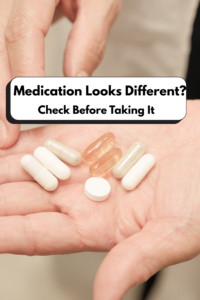 You open a new refill and the tablet appears to have had a complete makeover. Last month it was round and white. This month it is oval, peach, and acting as though you should recognize it immediately.
A medicine that looks different does not automatically mean something is wrong. A pharmacy may receive the same medication from a different manufacturer, or you may receive a generic version instead of a brand-name product. Health Canada explains that generic drugs can differ in colour, size, shape, or markings because manufacturers may use different nonmedicinal ingredients and their own identifying symbols.
Still, appearance alone cannot prove that a medication is correct. When something looks unfamiliar, the safest response is not panic—and definitely not pill roulette. Pause and check.
Pause Before Taking It
Keep the medication in its labelled container and pause before taking the unfamiliar tablet or capsule until you have confirmed what it is.
Do not throw it away, mix it with older tablets, or move it into an unlabelled container. Those actions remove useful clues the pharmacy may need.
Contact the dispensing pharmacy promptly. If the next dose is time-sensitive and the pharmacy is closed, seek advice from an available pharmacist, healthcare provider, or local health service rather than guessing or stopping treatment for several days on your own.
Start With the Prescription Label
Check the following information:
- The patient’s name
- The medication name
- The strength
- The directions
- The dosage form, such as tablet or capsule
- The refill date
- The pharmacy information
A generic name may differ from the brand name you remember, so an unfamiliar name does not automatically mean the medicine is wrong. However, the name, strength, and directions should match what you expected unless your prescriber intentionally changed the prescription.
One small number can change the entire story. A 5 mg tablet and a 50 mg tablet are not close relatives. They are different doses.
Look at the Medication—but Do Not Rely on Looks Alone
Note the colour, shape, size, score line, and letters or numbers printed on the tablet or capsule. These details can help the pharmacist identify the manufacturer and product.
If you still have a tablet from the previous refill, keep the old and new supplies separate in their original labelled containers. Bring both containers to the pharmacy or describe the differences by phone.
This is also why keeping the original medication container matters. The label gives the mystery a name, strength, directions, and pharmacy record. A loose pill on the counter mostly gives attitude.
Call the Pharmacy That Dispensed It
The dispensing pharmacy is usually the best first call because its team can review your prescription, the product selected, and the manufacturer.
Have the container nearby and be ready to read the label and tablet imprint. You can ask:
- Is this the same medication and strength as my previous refill?
- Did the manufacturer change?
- Was a generic product substituted?
- Did my prescriber change the dose or dosage form?
- Are the directions still the same?
The pharmacist may confirm that the medicine is correct and simply has a new appearance. If there is a problem, the pharmacy can explain the next step.
Either way, a short phone call is better than a home investigation starring a flashlight, three search tabs, and rising suspicion.
When It Needs Prompt Checking
Do not take the unfamiliar product until the pharmacy has checked it if:
- The patient name on the label is wrong.
- The medication name or strength is unexpected.
- The container holds mixed tablets or capsules.
- The package seal is damaged.
- The medication is chipped, crumbling, discoloured, wet, or has an unusual smell.
- You cannot identify where the medication came from.
Do not use an online image alone to make the final decision. Similar-looking products and differences between manufacturers can make visual comparisons unreliable. Let the pharmacist confirm the medication using the prescription and dispensing record.
What If You Already Took It?
If you already took the medication and then realized it looked wrong, do not automatically double or skip your next dose. Call the pharmacy, your prescriber, or a poison centre for advice based on the specific medication and amount taken.
Call emergency services for severe symptoms such as trouble breathing, swelling of the face, lips, or tongue, fainting, a seizure, or severe confusion.
In Canada, 1-844-POISON-X or 1-844-764-7669 connects callers with their local poison centre for suspected poisoning or medication errors.
Make the Next Refill Easier
Before leaving the pharmacy, look at the medication when practical. Confirm the name, strength, directions, and appearance while the pharmacy team is nearby. The New Prescription Check gives you four simple questions to review before leaving.
Keep a current medication list and store medicines in their original labelled containers. A photograph may help you notice a change, but the prescription label and pharmacist remain the better sources for confirmation.
The Bottom Line
Medication can sometimes look different even when it contains the same active ingredient and strength. A manufacturer change may explain a new colour, shape, size, or imprint—but you should never have to guess.
Pause. Check the label. Keep the container. Call the pharmacy.
Your refill may have changed outfits, but it still needs to show proper identification.
Disclaimer
This article is for general health education only and is not medical advice. Medication appearance, instructions, risks, and recommended actions vary by product and individual circumstances. Always follow your own prescription label and speak with your pharmacist, prescriber, poison centre, or another qualified healthcare professional about questions specific to you. Call emergency services for severe or life-threatening symptoms.